

Stages of Order Fulfillment
Receiving Inventory: This involves receiving goods from suppliers or manufacturers into the warehouse or fulfillment center. Proper receiving ensures that the correct quantities and products are in stock.
Inventory Storage: After receiving, products are stored in designated areas within the warehouse, organized to facilitate efficient picking and packing.
Order Processing: This stage begins when a customer places an order, triggering a series of activities to prepare the items for shipment
Picking After packing, the order is shipped to the customer. The fulfillment center or warehouse typically works with third-party carriers (such as FedEx, UPS, or local couriers) to deliver the product
Shipping : After packing, the order is shipped to the customer. The fulfillment center or warehouse typically works with third-party carriers (such as FedEx, UPS, or local couriers) to deliver the product.
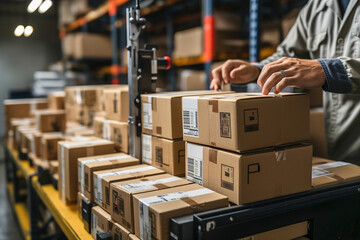

Order Fulfillment Models
B2C (Business-to-Consumer): Fulfillment for businesses selling directly to consumers (e.g., e-commerce). B2C fulfillment typically involves smaller order quantities and more frequent shipments.
B2B (Business-to-Business): Businesses fulfilling orders for other businesses. B2B fulfillment often involves larger orders, bulk shipping, and specific customer requirements.
Subscription Fulfillment: Businesses that deliver subscription boxes or recurring shipments, requiring regular and predictable fulfillment cycles.
Omnichannel Fulfillment: A fulfillment strategy that integrates multiple sales channels (e.g., physical stores, online platforms) and ensures seamless customer experiences regardless of the channel used.


Types of Order Fulfillment
Inventory Turnover Ratio: Measures how often inventory is sold and replaced over a specific period. A high ratio indicates efficient inventory use, while a low ratio suggests overstocking or slow-moving goods.
Days Sales of Inventory (DSI): The average number of days a company takes to sell its inventory. Lower DSI values are typically better, indicating efficient inventory movement.
Reorder Point (ROP): The inventory level at which new stock should be ordered to prevent stockouts.
Carrying Costs: The total costs associated with holding inventory, including storage, insurance, depreciation, and opportunity costs.
Packing: Preparing goods for shipment, including packaging and labeling.
Key in Order Fulfillment
Warehouse Management Systems (WMS): Software that helps manage the day-to-day operations in a warehouse. WMS assists with inventory tracking, order processing, and optimizing picking routes.
Order Management System (OMS): Software that tracks and manages customer orders across various sales channels, ensuring a smooth order fulfillment process
Inventory Management Systems: Tools that track inventory levels, orders, sales, and deliveries. They help maintain optimal stock levels and reduce the chances of stockouts or overstocking.
Automation and Robotics: Automated fulfillment systems and robots are increasingly used in warehouses for picking, packing, sorting, and shipping. They speed up the process, reduce errors, and lower labor costs.